Auburn Hills, MI · Oakland County
Basement Water Damage Restoration in Auburn Hills, MIBasement Dehumidification & Basement Floor Water Removal
Basement Water Damage Restoration in Auburn Hills includes emergency basement flood cleanup, basement sewer backup cleanup and basement wall drying.
Answered 24/7
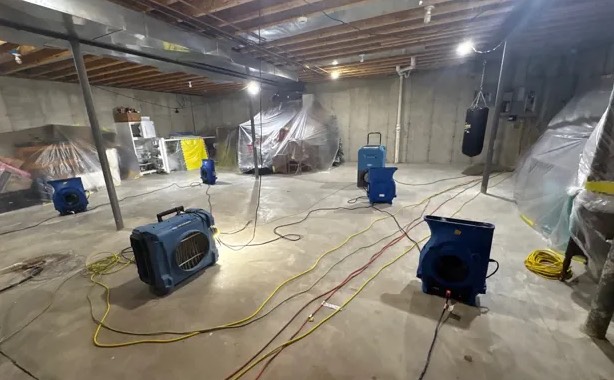
Local Basement Water Damage Restoration Near Auburn Hills
In Auburn Hills, a damp, musty basement or lower room often means water damage that was never fully dried. Old leaks can leave moisture in walls and under flooring long after the water is gone.
One burst pipe or heavy storm in Auburn Hills can flood a basement. Local water damage pros serve Auburn Hills and nearby Pontiac, Orion Township and Rochester, with help available around the clock.
Basement Water Damage Restoration Solutions Available in Auburn Hills
Basement Dehumidification
A basement with no moisture problem before the flood may still need a dehumidifier afterward while the concrete dries.
Basement Floor Water Removal
A slab can look dry on top while still holding water. Moisture readings show when it is ready for new flooring.
Basement Sewer Backup Cleanup
Sewage that backs up through a floor drain or toilet is extracted with protective gear, and the area is contained from the rest of the house.
Emergency Basement Flood Cleanup
A flooded basement can damage furnaces, water heaters and stored items quickly. Fast pumping limits how much is lost.
Basement Wall Drying
Finished basement walls hide wet insulation and framing. Removing the bottom of the drywall lets air reach the cavity.
Signs of Basement Water Damage in Auburn Hills
Warped or Buckling Basement Floors
Laminate, wood or vinyl flooring that buckles or lifts in the basement has water underneath.
Sump Pump Failure or Overflow
A sump pump that runs constantly, fails to start or lets the pit overflow puts the basement at risk.
Rusted Appliances or Pipes
Rust on the water heater, furnace base or pipes points to repeated moisture or past flooding.
Condensation on Windows or Pipes
Water beading on cold pipes or basement windows shows high humidity that keeps materials damp.
How Basement Water Damage Restoration Works in Auburn Hills
Step 1: Initial Assessment and Water Removal
The source and type of water are identified, and standing water is removed right away.
Step 2: Focused Drying of Materials
Walls, framing and the slab are dried with directed airflow, with wet insulation removed.
Step 3: Air Quality Management
Air scrubbers filter dust and odors from removal work while drying continues.
Step 4: Documentation for Restoration
Photos, readings and a list of removed materials are prepared for insurance and rebuilding.
What Causes Basement Water Damage Restoration in Auburn Hills
Sewer Line Backups
A blocked or overloaded sewer line pushes wastewater up through basement drains and toilets.
Stormwater Runoff Into Lower Levels
Heavy rain running off hard ground or a sloped yard can pour down stairwells and under doors into below-grade rooms.
Failed or Clogged Drain Tile
Clogged or collapsed drain tile around the foundation lets water build up against the walls.
Foundation Cracks and Leaks
Cracks in foundation walls let groundwater and melting snow seep into the basement.
Both Residential & Commercial Basement Water Damage Restoration in Auburn Hills
Residential Basement Water Damage Restoration
Homeowners with older basements may have seepage that returns with each storm. Drying fixes the current damage, and the source is noted for a waterproofing contractor.
Commercial Basement Water Damage Restoration
Apartment and condo buildings with shared basements or lower levels may have laundry and storage below grade. Each area is extracted, dried and recorded for the building manager.
Basement Water Damage Restoration vs. DIY: When to Call the Pros
Sewage in a basement should not be cleaned up without gloves, boots and eye protection. For any backup through a floor drain or toilet, call local water damage pros.
Basement Water Damage Restoration Cost in Auburn Hills, MI
The cost of basement water damage restoration in Auburn Hills depends on how much water there is, whether it is clean or sewage and how much finished material must be removed.
Drying Time Required
Basements dry slowly, and longer drying means more equipment days and monitoring visits.
Material Saturation
Finished basements with carpet, drywall and insulation take more removal work than bare concrete.
Affected Square Footage
Larger basements need more extraction, more drying equipment and more days of drying time.
Does Insurance Cover Basement Water Damage Restoration?
Coverage for groundwater seepage and backups varies widely between policies. Ask your adjuster whether your policy includes it before work begins.
Benefits of Local Pros for Basement Water Damage Restoration in Auburn Hills
Advanced Moisture Detection
Moisture meters and thermal cameras find water in walls and slabs that looks dry.
Detailed Documentation
Photos, readings and drying logs are kept to support your insurance claim.
Industrial-Grade Equipment
Pumps, extractors and large dehumidifiers remove water much faster than household wet vacs and fans.
Emergency Basement Water Damage Restoration Available in Auburn Hills
Sewage coming up through a floor drain? Stop using water in the house and call (313) 766-2970 now for basement water damage restoration in Auburn Hills.
Call Now (313) 766-2970Local Basement Water Damage Restoration Coverage: Auburn Hills and Beyond
Help with basement water damage restoration is also available in communities near Auburn Hills, including Pontiac, Orion Township and Rochester, for flooded basements and sewer backups.
- Basement Water Damage Restoration in Pontiac
- Basement Water Damage Restoration in Orion Township
- Basement Water Damage Restoration in Rochester
- Basement Water Damage Restoration in Lake Orion
- Basement Water Damage Restoration in Troy
- Basement Water Damage Restoration in Waterford Township
- Basement Water Damage Restoration in Bloomfield Township
- Basement Water Damage Restoration in West Bloomfield
- Emergency Damage Restoration in 48321
- Storm Damage Restoration in 48321
- Water Damage Restoration in 48321
- Water Extraction Service in 48321
- Water Leak Detection in 48321
- Water Removal Service in 48321
- Emergency Damage Restoration in 48326
- Storm Damage Restoration in 48326
Frequently Asked Questions About Basement Water Damage Restoration
Why is quick action important for below-grade flood restoration?
Basements dry slowly, so every hour of standing water adds days of drying and more material to replace.
What is involved in basement water damage restoration?
Pumping out water, removing soaked materials, cleaning contaminated areas, drying walls, framing and concrete, and dehumidifying until readings are normal.
Why is dehumidification so important after basement water removal?
Basements hold moisture in the air and concrete. Without dehumidifiers, walls and framing stay damp long after the water is gone.
How long does below-grade drying take after a flood?
Often several days or longer, since concrete and cool basement air dry slowly. Daily readings show progress.
How soon should I call for basement water extraction after a leak?
Right away. Water wicks up drywall and soaks framing within hours, and below-grade spaces are slow to dry.